
Define Irony
Actually I am looking at Migration and Dispersal

I really feel for Winona Ryder’s character in Reality Bites (1994) when she is asked to define irony in a job interview. And blows it! During one of my oral exams in grad school I found myself in a similar situation. “What is the difference between dispersal and migration?” Pretty basic question for any ecology, behavioral ecology, biology student. I could see it written as a short answer question on an ecology final. The whole point of these oral exams was to have a conversation with these college professors so they could decide if they were ready to let me into their exclusive club. The advice I had gotten from grad students who had been through the process was, they are looking for depth and breadth of knowledge. Hmmm, I needed to come up with solid definitions for dispersal and migration that highlighted their differences and refer to current relevant research and past classic studies that lead to contributions in the field. Finally how does this apply to my research, The Spatial Distribution of Two Human Biting Ticks, and I’ll spare you the sub-title.
This is where I choked and stumbled, mumbled, and bumbled my way through some sort of explanation of migration having a return trip. It was uncomfortable, but I got through.
This memory always comes rushing back when I think about migration. Adventure travel often boils down to dispersal and migration. Do we travel to expand our horizons? Expand our range? Fill in the gaps of our cognitive maps? Test some new skills and paradigms? Or are we traveling seasonally to escape inhospitable conditions? Are we following a seasonal shift to ensure resources, sunshine, warmth, cooler conditions, water, fire season impacts, whatever the needs might be?
My fondest memory of migration during a trip was an overnight with Jake Francis during a mass migration of Painted Lady butterflies. Oh, and then there was the record arribada (arrival, synchronous nesting) of Ridley Olive Sea Turtles on an isolated beach in Costa Rica. I best not think of all the possible chance encounters with migration and dispersal I have had. None were intentional, just being in the right place at the right time.
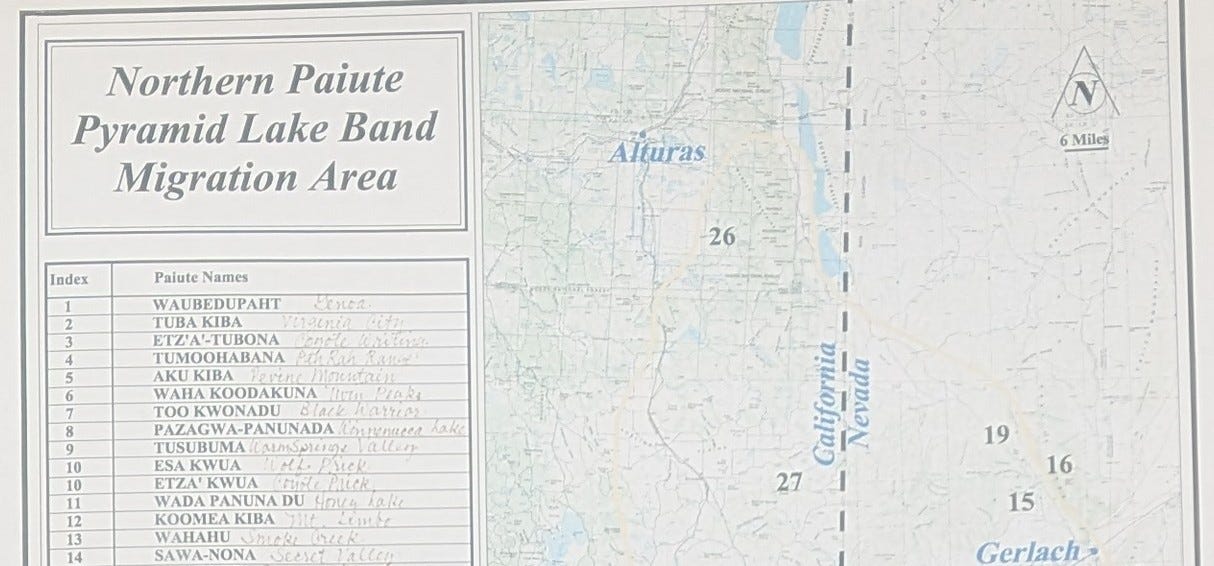
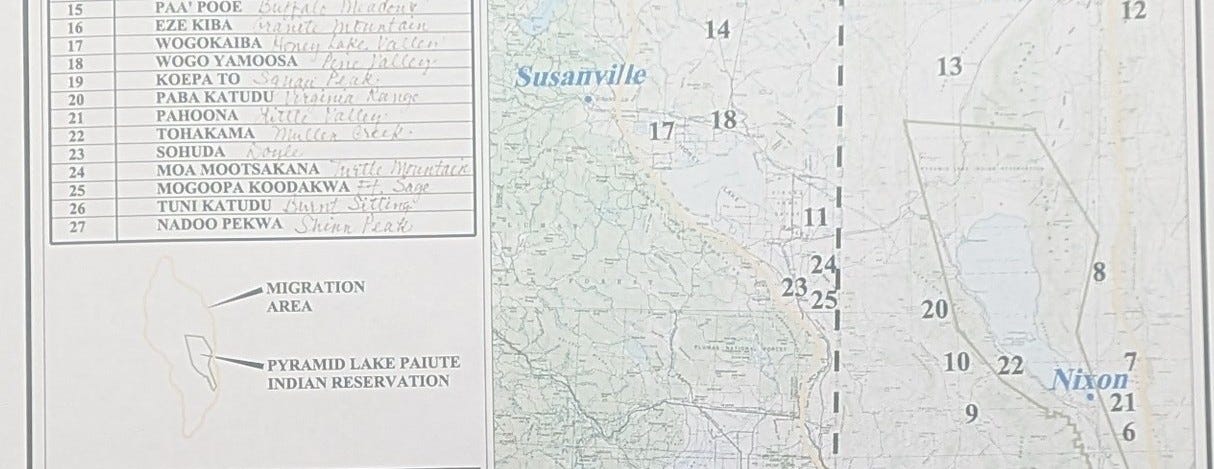
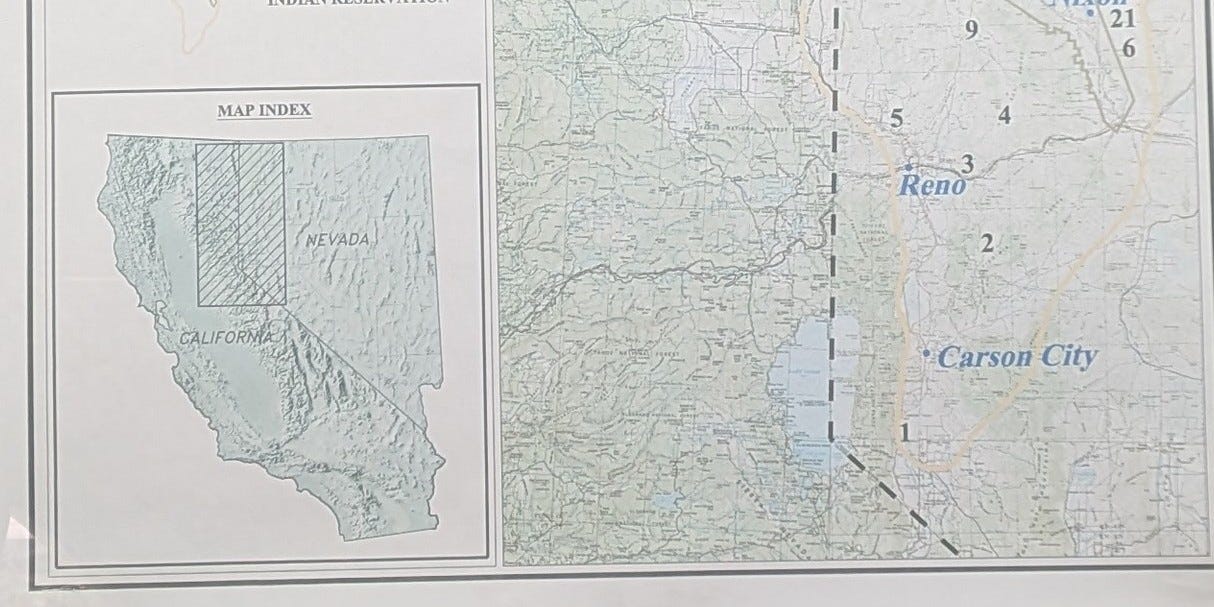
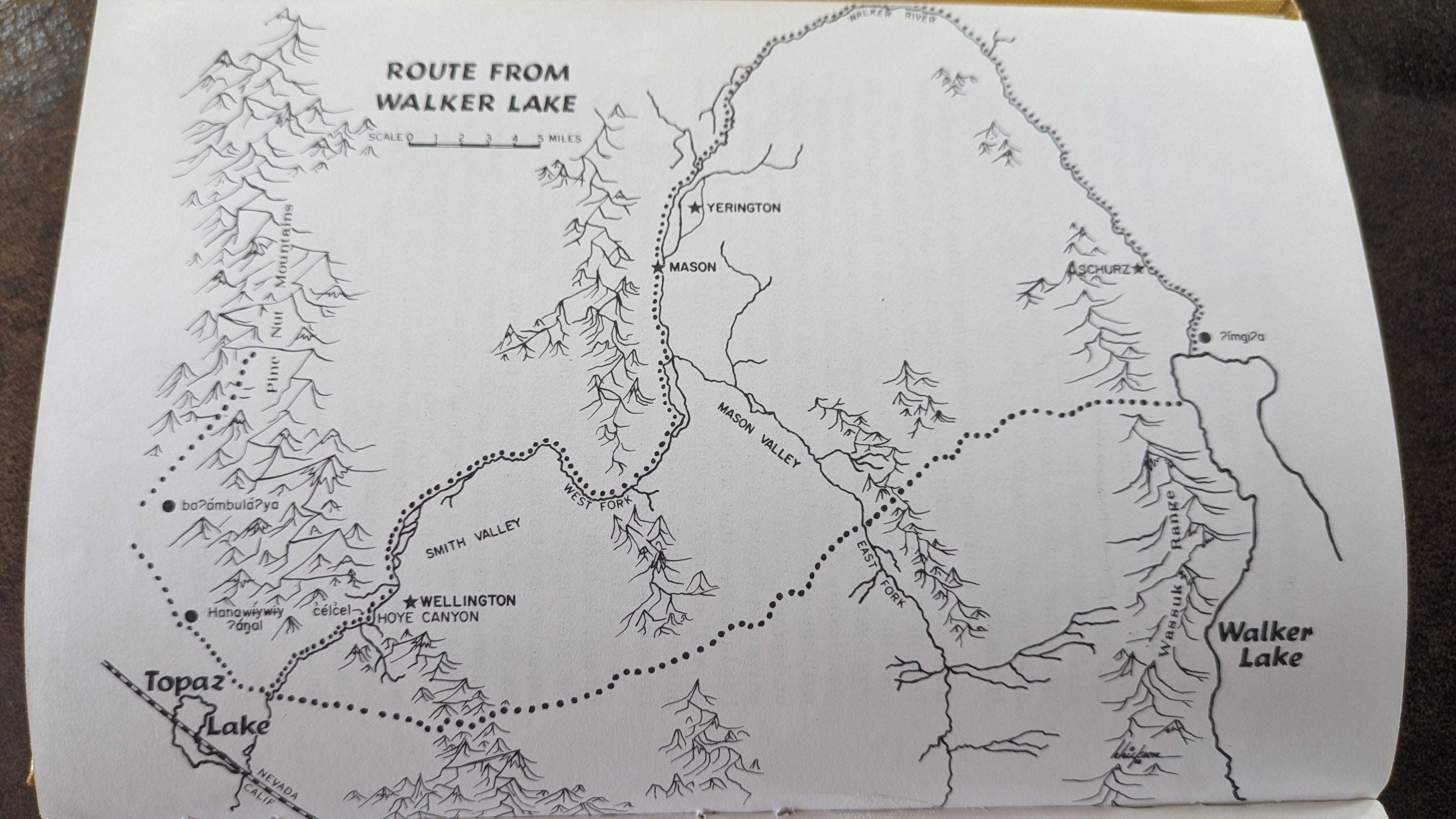
I was in the Pyramid Lake Museum and Visitors Center and saw a map that caught my eye, migration area for Pyramid Lake Northern Paiute . Described as semi-nomadic, Numu had villages on the Pyramid Lake shore but would travel to follow game and harvest resources. These routes intrigue me as places to go and like following railroads or stagecoach or livestock routes there must be reasons to follow and water and a reasonable path.
Craig Child’s book, Atlas of a Lost World, tells a great story about dispersal for discovery, about the first people to walk North America in a way I could only hope to. He visits some key anthropological sites for an adventure like no other. He even touches on the Great Basin from its northern extreme near Paisley, Oregon and touches on some paleologic evidence in norther Nevada, the petroglyphs found at Winnemucca Dry Lake, some of the oldest known in North America.
Of course with my bias I think he could have focused on the northern Nevada, with the references to the short faced bears, mammoth digs, caves along Lake Lahontan and so on. But those are my biases. I really appreciate his perspective of moving the the ancient lands, what barriers had to be overcome, and eventually the round-trips that had to be made to convince the next group to make the journey. I also appreciate his acknowledgement of the uncertainty in the science of dating archeological finds and interpretation with personal bias.
Child also draws parallels with modern and first adventures across the new world.
Child reminds us that the evidence we use to establish first people aren’t necessarily “earliest” it takes time to become established to point to become visible.
Clearly Child does an enviable amount of research for this project. What would this look like for a northern Nevada project? There is plenty of research on the civilization that was built on the shores of the ancient Lake Lahontan. What would a journey on the shore look like? It is not as if lake Lahontan was a nice oval shaped lake. The path from the Quinn River Valley to Walker Lake would be a true adventure. To combine this with the biogeography of of plant and animal communities as well as overlapping routes with Nevada’s Indian tribes and eventually European settlers expanding through Utah Territory and California Trails would be an amazing map of human dispersal and migration in the Great Basin.
Thank you for continuing to support and share my storytelling. If there is anything I can do to help get you out there please reach out.
Atlas of a lost world: travels in ice age america Craig Childs (2018) New York, Pantheon Books. - I listened to this book while I was traveling in Japan. I will definitely seek out my own print copy. I came across this from a recommendation from my aunt to read Childs’ The Wild Dark, finding the night sky in the Age of Light. Now I will read everything by Childs.
December/January in Review
Getting back from Japan I came down with the Reno Crud, a cold that just sucked all motivation right out of me. I have been in bed and fixated on so many goals I have leading up to my trips in February and March. My original goal was to get this newsletter before mid-month January, then get anew newsletter out by the first week of February. But here we are.
I had a burst of enthusiasm for December, to finish the year off strong and all. Squeeze out the last few outdoor miles and indoor workouts between that Thanksgiving-Christmas-New Years period. For some it is a “dead week” period (maybe that mostly refers to Christmas to New Years) but for others there is this burst of productivity to host that last Zoom meeting, or in-person meeting of the year. Then there are the office Christmas parties and social commitments on the calendar. And don’t get me wrong, I enjoy these social get togethers, but I don’t like having to consult my calendar to avoid double-booking or searching for time for a nice long bike ride.
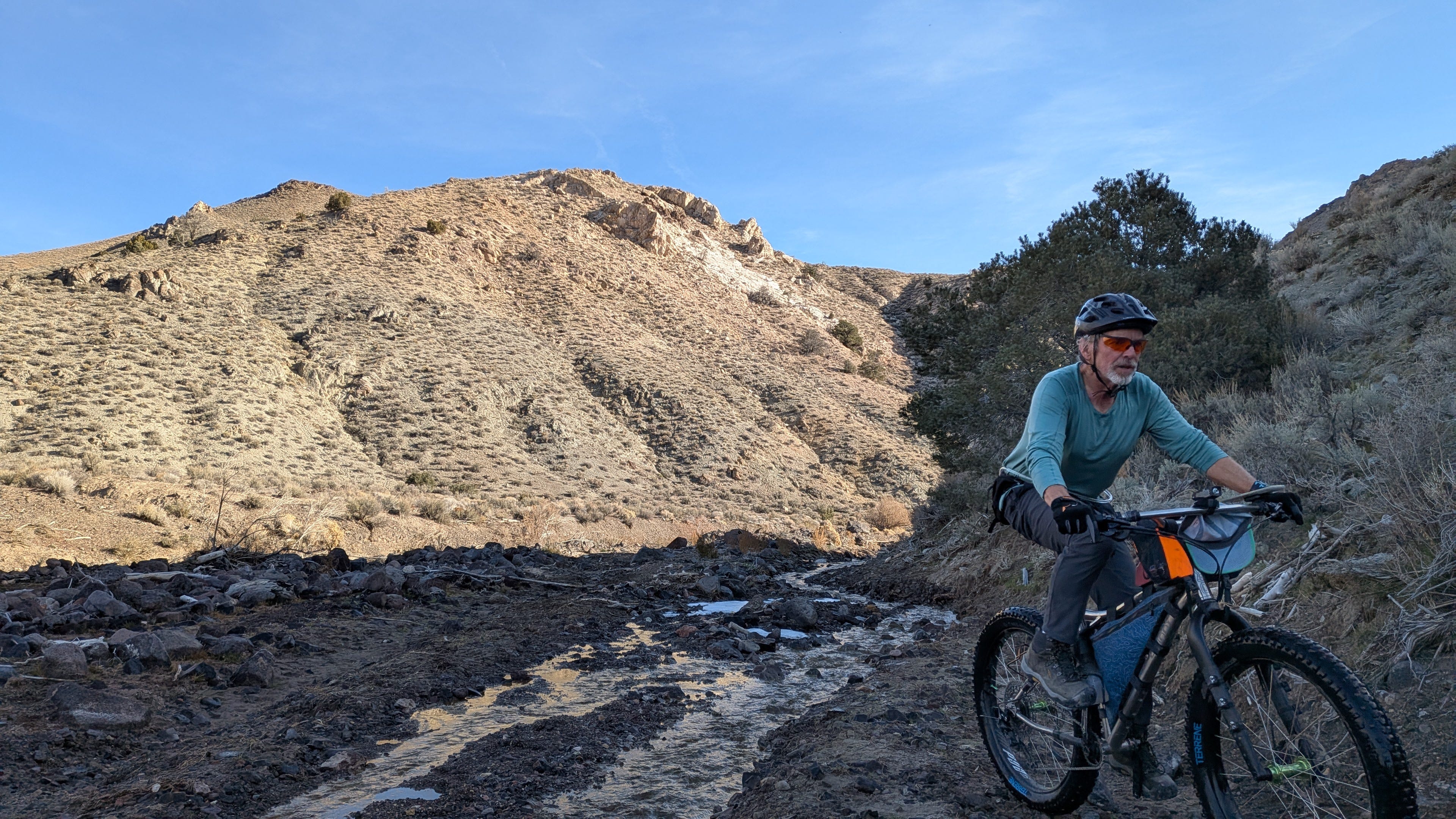
I did get out on a great adventure with Doug A to the Bolivia Mining Camp and the north end of the Stillwater Range. We both drove into Dixie Valley separately. I thought Doug was getting there much earlier than I was plus I had a Zoom meeting leading up to my departure. But we both arrived at the base of Cottonwood Canyon just south of the Dixie Valley geothermal power plant. The route was spectacular and the ride filled in a puzzle piece for that area.
I did post three ride reports on Bikepacking Northern Nevada
There is more to come starting with the Annual Review.
Otherwise the rest of my rides were just good local outings that kept the fire going until I left for Japan. On December 21 I traveled with my girlfriend to Tokyo to visit her brother’s family in Yokohama. There was a lot of walking and eating and drinking Asahi Dry beer. And sake. And whiskey.


After the New Year I traveled on my own to Osaka on the Bullet Train to visit my friend Tomo. More eating, less drinking. I had a day on my own and went to Himeji Castle. That was a highlight of the trip. We soaked in the local neighborhood baths or sentos , including Super Sentos, which were fancier day-spa like baths. We ate all-the-chicken on a stick one night that left me with a chicken hangover the next day. We also overindulged on all you can eat beef bar-b-que while discussing the virtues of a vegan diet. Tomo and I had an exquisite sushi dinner that has spoiled me on eating sushi going forward. We did stop in to a few bike shops along the way. I was super impressed by their inventory levels and variety. It left me inspired to ride bikes in Japan.
Tomo and I discussed the possibility of doing a folding-bike/train tour of Japan. I see this a a definite possibility. Tomo is into the Brompton folding bikes and I am definitely curious about getting a Bike Friday.
Three trains and three planes later I was back in Reno. It was a long trip home but I was able to binge a full season of the Pitt between Haneda Airport and LAX. Overall flying United was good.
I was probably on the edge of having a cold and that travel pushed me over the edge. I have doing everything to get past it so it doesn’t linger any longer than necessary.
Looking ahead - the calendar is filling up!
Working with three non-profits means this time of year is busy planning the year ahead. I just met with Wildwood Open Lands Foundation to discuss fundraisers, stewardship, day trips, the Howling Micro Rally, this year’s Expedition, and our guided trip on the Applegate Lassen Emigrant Trail. I have been putting my backroads experience to work to combine programming for trucks and bikes. That is a busy February through October plan. Check out the full calendar for 2026, join in if you can. #bikepackingisoverlandingforbikenerds
Friends of Black Rock High Rock has a similarly busy schedule with Fly Geyser Nature Walks, which might be expanding to include more programming, art/historic tours of Gerlach, hosting the Wild and Scenic Film Festival in Reno, Black Rock Rendezvous, and Perseids Meteor Shower Campout. That should do it! And Rides with Friends, those might just fall under community rides I host to meet up with any Friends’ group events.
My work with Bikepacking Roots continues as a Community, Route, and Advocacy Steward. If you are not familiar with their work I encourage you to check out their stewardship and advocacy for access to trails and public lands. Even if you are not a bikepacker, but a trail user you can find some value in their work.
I enjoy working with Chelsea Kincheloe at NDOR on her overlapping projects. We have worked on a 600 mile trail submission for the BOLDT Act. We are working on beginner bikepacking routes to be included on NVTrailfinder website. Chelsea is also in charge of NV’s Starry Skies program which is for everyone.
The American Discovery Trail is celebrating the 250th Anniversary of the Declaration of Independence. They are hosting a transcontinental relay between July 4 and November 26, Thanksgiving. I just had a Zoom meeting with Nevada stakeholders to coordinate the 500+ mile relay of hikers, runners, equestrians, and cyclists. Samantha Szesciorka is the Nevada State coordinator for the ADT and it is a pleasure to work with her. It should be a fun event.
Ultimately my volunteer work continues because I get the most out of working with talented and passionate people.
Next time im in Nevada with a mountain bike, I will be doing what I can to join in on one of these trips. Love the work you're doing man. Its a pleasure reading your substack.